 AsobiSpace
Budō · Technology · Part 2
From the tatami to the lab: What the dojo taught me beyond the tatami
How teaching budō gave me confidence and how that practice still shapes my work and everyday life.
Carlos J. Castro
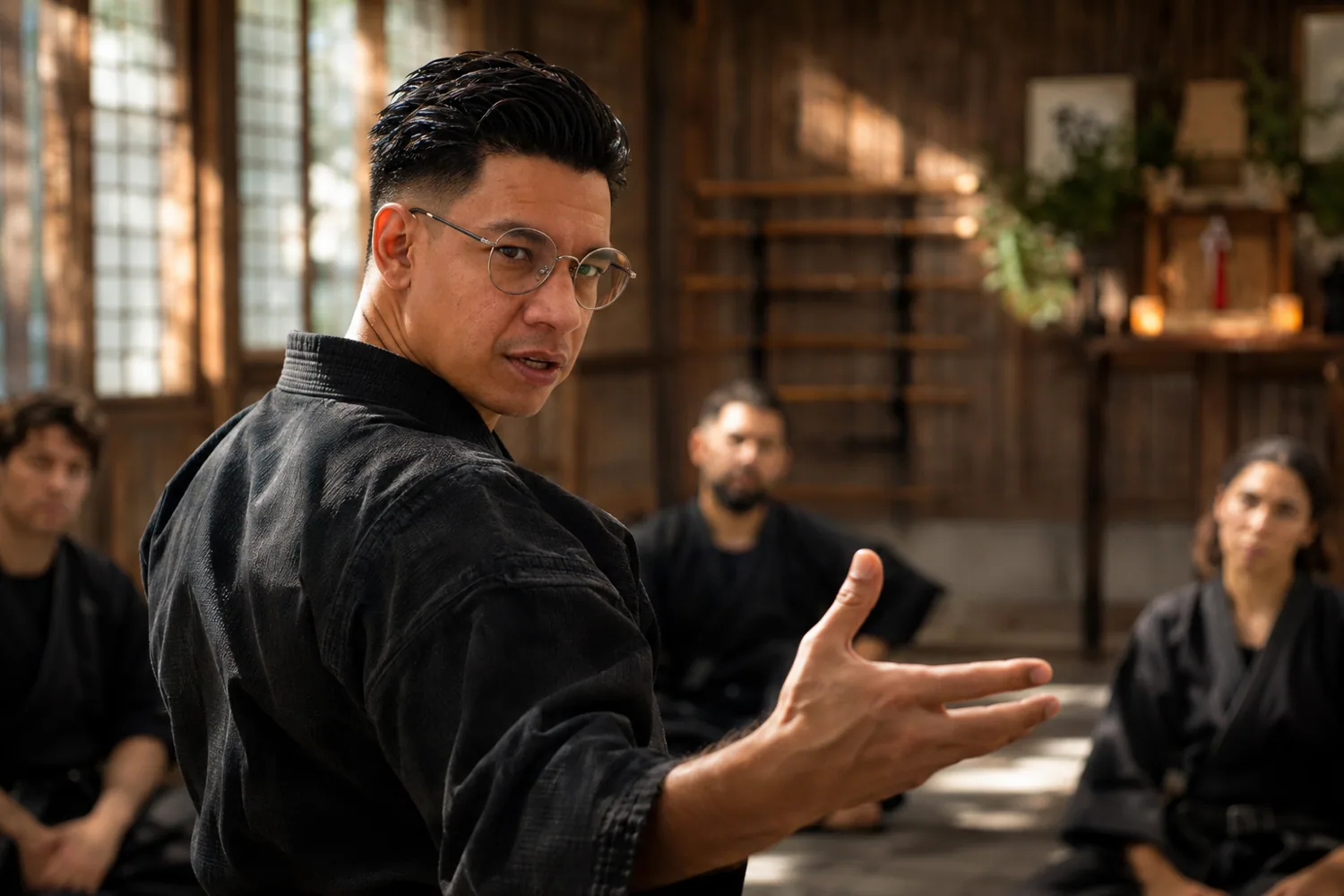
As a child, I was introverted. As a young man, I found myself teaching martial arts to people older than me. Teaching gave me confidence and taught me how to work with different personalities. I also discovered how much I learn by teaching. Every time I try to explain something to someone else, I have to understand it a little better myself.
In the first part, I wrote about how the fundamentals of budō stay with me when I build systems. Teaching showed me how much what I practice in the dojo also shapes how I act outside it.
Learning by teaching
One of the things I value most about teaching martial arts is that it has never been a one-way process. Even when I’m the one guiding the practice, I find opportunities to keep learning.
When I try to explain a technique, I need to understand what makes it work. Performing it isn’t enough; I also have to find a way to communicate its principles. And because everyone learns differently, an explanation that works for one person may not be enough for another.
That invites me to observe, find other ways to explain, and sometimes reconsider something I thought I understood. Over the years, I’ve come to value questions, especially the ones that make me look at a problem from a different angle.
Teaching has also made me reflect on something else: the importance of helping others build confidence in their own abilities. I think especially of children. Their curiosity and willingness to explore can be extraordinary, but they need to feel safe expressing themselves, making mistakes, and facing new challenges.
Supporting that process doesn’t mean shielding them from every difficulty. It means helping them discover that they can learn from challenges, adapt, and keep trying. That’s why I value spaces where learning isn’t only about doing things correctly, but also about asking questions, experimenting, and discovering.
In budō, this reminds me that teaching shouldn’t be limited to reproducing movements. Understanding principles and developing the ability to adapt them matter just as much as learning a technique. I also find an idea interesting in a message attributed to Masaaki Hatsumi about jibun de narai: the importance of students learning for themselves rather than relying only on an instructor’s answers.
I find something similar outside the dojo. When I share a technical idea or try to explain how a solution works, I discover things I hadn’t considered while working on it. Perhaps one of the most valuable lessons of teaching is remembering that experience doesn’t mean we’ve finished learning—and that teaching can also help others discover how much they are capable of learning on their own.
Mushin and Kangaenai
As a Bujinkan Dojo instructor, I see a connection between mushin, often translated as ‘no mind,’ and the expression kangaenai, ‘not thinking.’ In my practice, both remind me how easy it is to get caught up in a doubt, an emotion, or a fixed idea, just when I need to respond to what’s happening.
I don’t take this to mean stopping thinking or acting without preparation. On the contrary, practice and study are part of what allows us to respond more naturally. There are moments to analyze, correct, and understand. But there are also moments when I need to trust what I’ve practiced and act without getting caught up in every possibility.
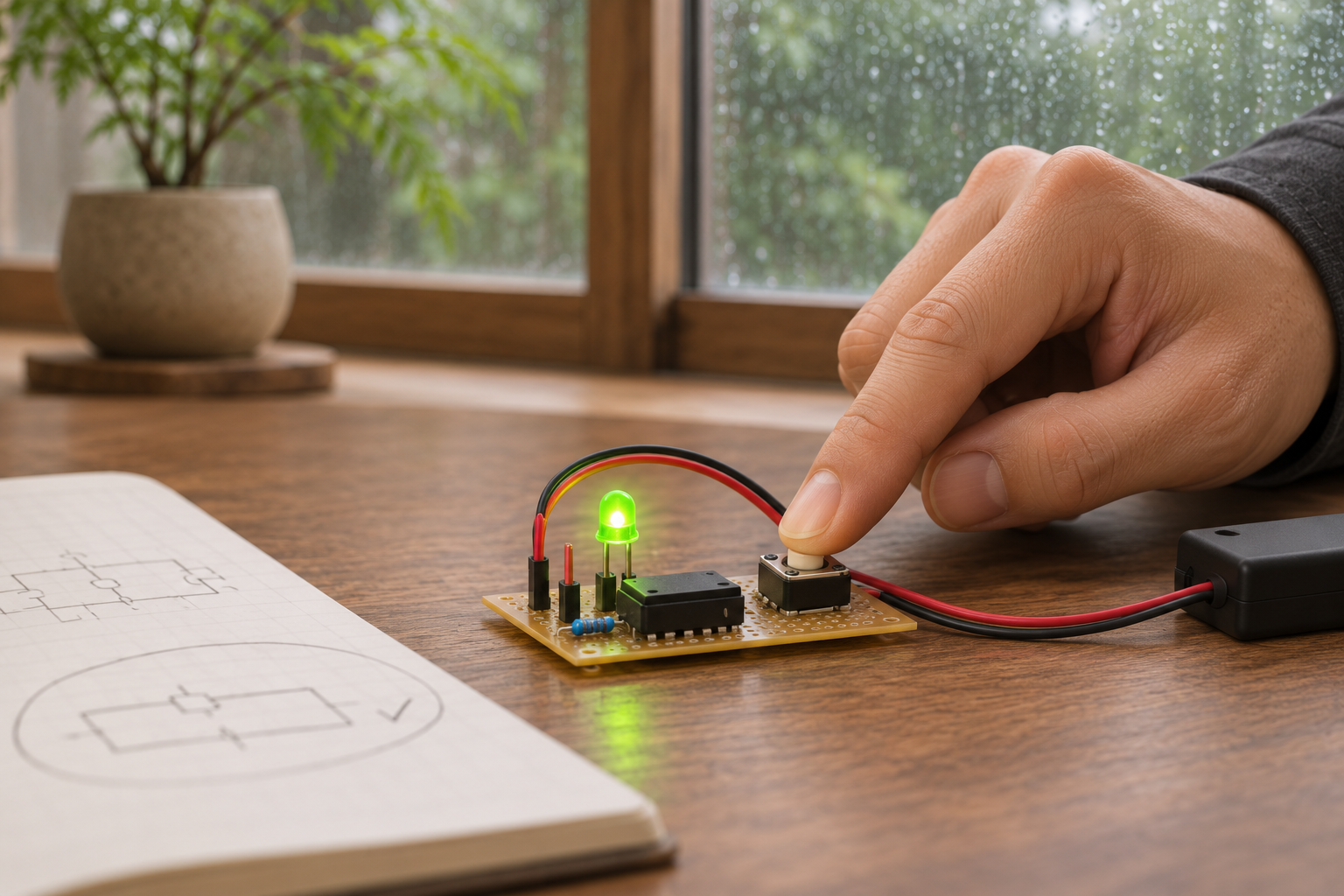
That experience feels familiar outside the tatami. I can spend too much time thinking about how to structure a system. Sometimes what gives me clarity is making a small decision I can test. I recognize that resistance even when I’m getting out of bed. Some days, starting is the hardest part.
My ikigai
I recognize something of myself in the idea of ikigai when I think about what I enjoy: creating, learning, teaching, exploring, and solving problems. What I do may change over the years. I’m interested in seeing what new forms those interests will take.
Sometimes that connection appears in the dojo, when explaining something makes me understand it better. Other times it appears in the lab, when I take another look at a problem I thought I’d solved. AsobiSpace is where I chose to share what I’m discovering between those two places.
Learning doesn’t end on the tatami.
Read Part 1