 AsobiSpace
Budō · Technology · Part 1
From the tatami to the lab: Curiosity and fundamentals
How budō became part of the way I create and solve problems.
Carlos J. Castro
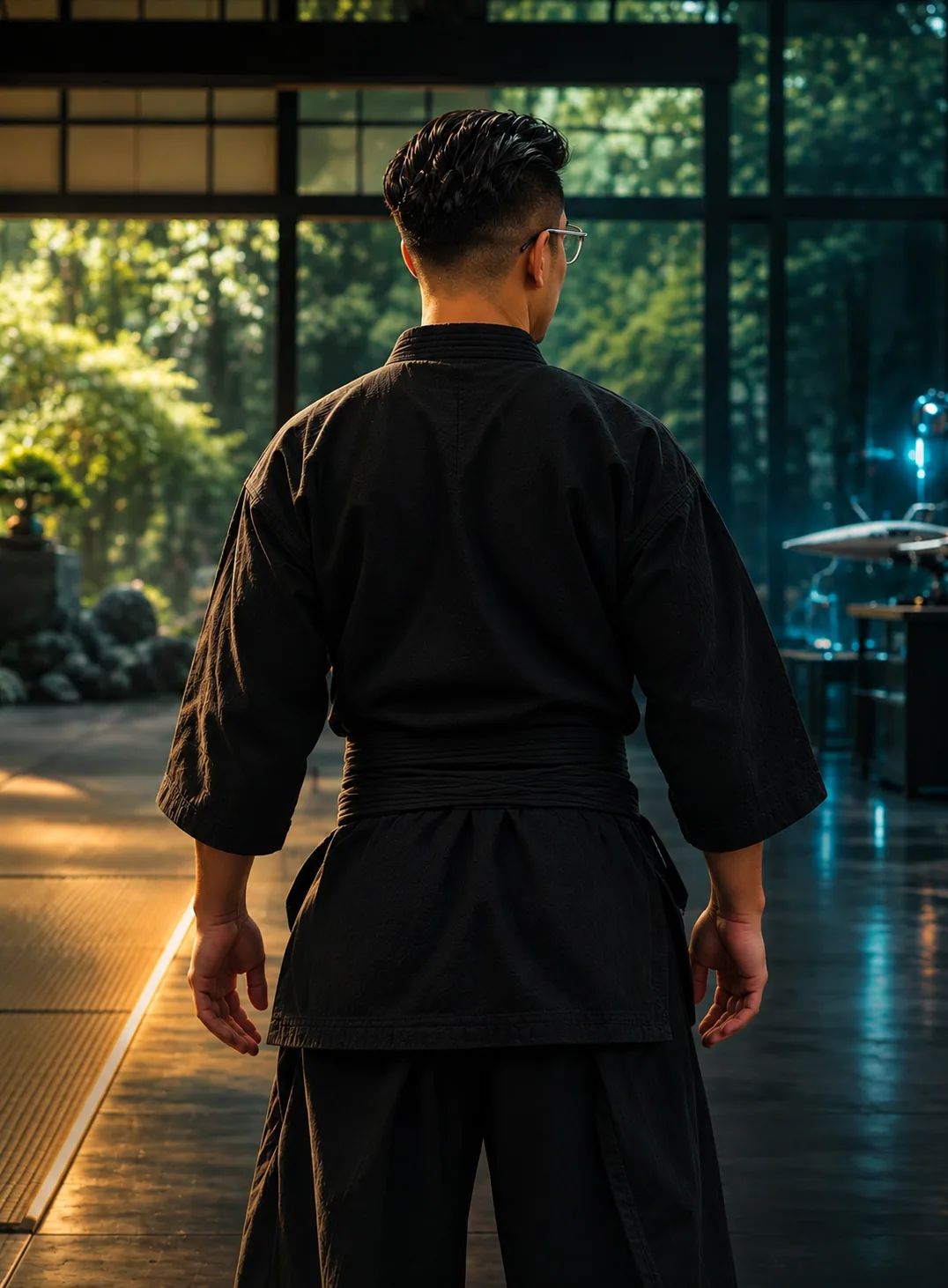
For much of my life I’ve moved between the tatami and technology. In the dojo, I practice and teach budō. Outside it, software development, artificial intelligence, and other areas of technology give me room to explore and build. For years, those two parts of my life simply coexisted. Over time I began paying more attention to what I learned in each, and I started to recognize how much of what I practiced on the tatami already shaped the way I worked.
Curiosity that wouldn’t stay in one place
My curiosity about technology took me from software to video games, 3D animation, and visual effects. More recently, it has led me to explore artificial intelligence, IoT, and robotics. For a while, I thought I should choose one of those areas and build my career around it.
What I really enjoy is creating. I like looking closely at a problem, trying to understand it, and discovering how different kinds of knowledge can help me solve it. Once I began to see curiosity as a way to broaden my perspective, I recognized something I’d been learning for years in the dojo.
Returning to the fundamentals
In budō, repetition and attention to detail help me understand what makes a movement work. Once I understand the principle behind a technique, I can recognize it in other situations and adapt to the circumstances.
Something similar happens in technology. Languages, platforms, and tools change. Understanding how a system works and what problem I’m trying to solve helps me choose my tools and adjust the design when conditions change.
Over the years, I’ve discovered that returning to the fundamentals doesn’t necessarily mean going back to the starting point. Sometimes it’s a chance to look at something I’ve practiced for a long time with fresh eyes. A movement that seemed simple can reveal details I hadn’t noticed before.
Experience helps me recognize patterns and better understand what I do, but it can also lead me to take certain things for granted. That’s why I think it matters to remain willing to look again at what I believe I already know.
Shoshin: the beginner’s mind
There is a Japanese concept that has always felt special to me: Shoshin (初心), the beginner’s mind. To me, it means more than a willingness to learn. It is also the ability to approach things with curiosity, wonder, and an open mind, without letting what we think we know limit what we might discover.
Sometimes I think about the way children imagine the world. There is something fascinating about the freedom with which they invent, dream, and explore possibilities without immediately questioning whether those ideas are feasible or even make sense. A child can imagine something extraordinary without worrying too much about how difficult it would be to make it real. They simply allow themselves to imagine.
As we grow older, we learn to understand the world better. We gain knowledge, experience, and the ability to analyze. All of that is valuable and necessary. But we also learn rules, expectations, and limits that can sometimes affect our willingness to explore unconventional ideas.
Perhaps growing up doesn’t necessarily mean losing our ability to create; what we may lose is some of the freedom and confidence with which we allow ourselves to do it. I don’t believe children are necessarily more creative than adults. What strikes me is how naturally they can give themselves over to imagination without immediately judging every idea.
And that freedom needs room to grow. Confidence, the safety to make mistakes, and support when facing new challenges can help children hold on to their desire to explore, even as they begin to understand that not everything is as simple as it once seemed.
In Zen Mind, Beginner’s Mind, Shunryu Suzuki develops an idea I find especially close to Shoshin: a beginner’s attitude leaves many possibilities open, while the certainties of someone who sees themselves as an expert can narrow them.
In budō, even after many years of practice, a familiar technique can still offer something new when I approach it with the curiosity of someone discovering it for the first time. Something similar happens in technology. When I begin exploring an unfamiliar field, I find that same mixture of enthusiasm, uncertainty, and curiosity that comes with early discoveries.
There is something special about that first encounter with the unknown. That initial excitement, that sense that there is still so much to discover. Something like falling in love for the first time with what we are beginning to learn.
Perhaps growing older shouldn’t mean leaving that outlook behind, but learning to combine it with experience. Holding on to some of that curiosity, that wonder, and that freedom to imagine. That beginner’s spirit. That Shoshin.
Henka and creativity
In budō, henka is associated with variation or transformation. To me, it also names the moment when what I’ve practiced meets the circumstances and something new emerges spontaneously.
Sometimes I experience the same thing when building a system. A solution begins to take shape as I understand the problem better and connect ideas that initially seemed unrelated. In those moments, returning to the fundamentals helps me see possibilities I had overlooked.
Over time, I’ve come to appreciate the kind of creativity that grows out of observing, experimenting, and combining what I’ve learned. I don’t always need to start with an entirely new idea. Sometimes changing my perspective or finding a connection between things I once saw as separate is enough.
Perhaps that is where I find a connection between Shoshin and Henka: allowing myself to imagine possibilities without dismissing them too soon, then using experience and fundamentals to explore how they might take shape. Imagination and analysis don’t have to work against each other. Imagination can open paths, and knowledge can help us travel them.
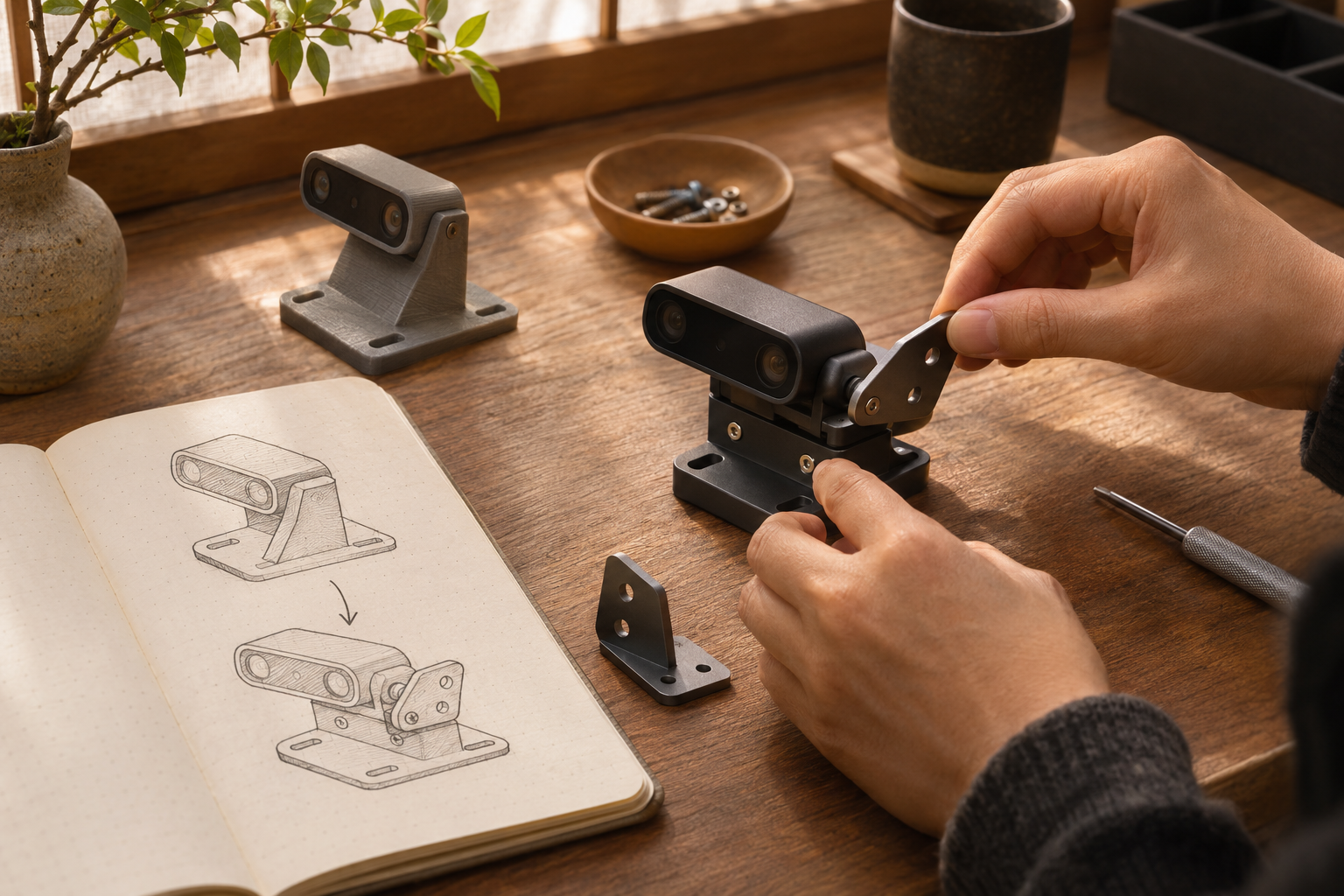
Even when I can see where to start, there’s still a difficulty I know well: getting out of my head and taking the first step.
Continue to Part 2